What if artificial intelligence were not “the pen that writes for you,” but the engine that pushes what you already know how to do much further? This book introduces the Editorial Engine: a working method where GPT-5 amplifies creativity while remaining firmly under the author’s guidance. Human centrality does not shift: the writer defines the idea, the direction, the tone, and the style; AI engages in dialogue, suggests, corrects, and accelerates the passage from inspiration to finished work.
You will find a complete, hands-on journey: from vision to core principles, from tools to structured workflows, through the writing of articles, essays, and fiction. It includes techniques for visual design, cover creation and essential editorial design principles, layout and export for PDF and EPUB, web presence with WordPress, social media activity, publication strategy, pricing, legal aspects, and future scenarios.
The guide speaks especially to those who want to understand and embrace the mechanics of independent publishing at a time when artificial intelligence is reshaping production processes, distribution models, and the relationship between authors and readers. It moves beyond a technical manual to become a strategic companion for anyone intent on building an autonomous, sustainable editorial path in a rapidly evolving landscape.
Tablet-optimized PDF, 166 pages – instant download – secure payment via lulu.com.
Summary
Part 1 – Vision and Fundamentals of the “Editorial Engine”
1 – Introduction
2 – AI in Writing
3 – Overview of AI Tools for Authors (GPT-5, Gemini, Claude)
4 – Creative Dialogue vs Prompt Engineering
5 – Customizing ChatGPT
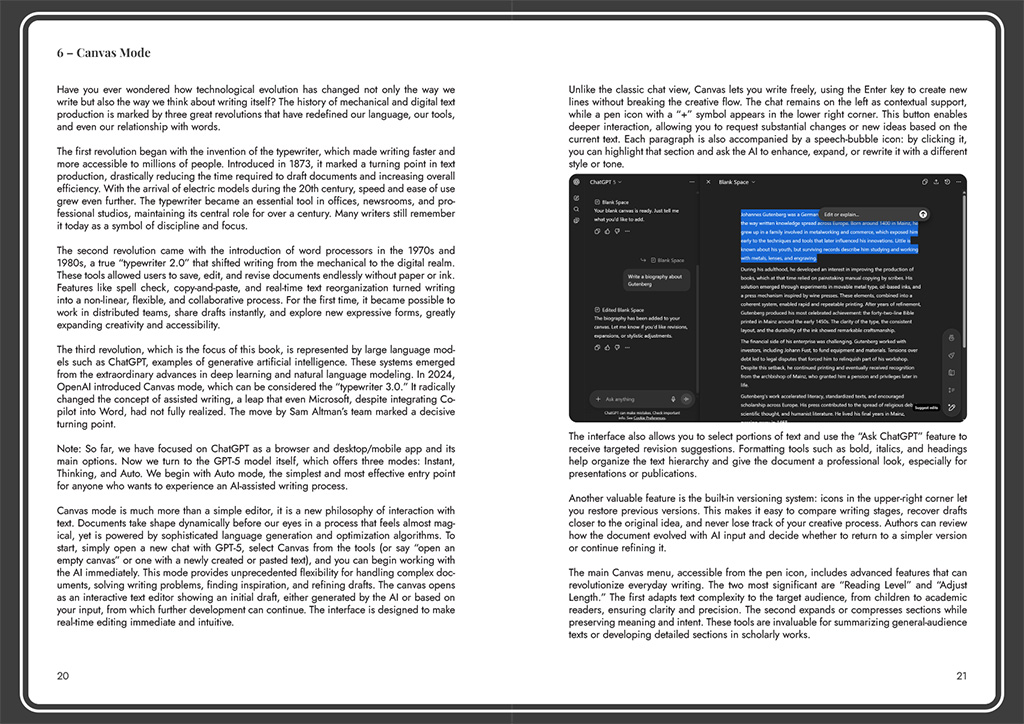
6 – Canvas Mode
7 – Projects in ChatGPT
8 – Thinking Mode and Workflow
9 – Language Models and Knowledge Management
10 – Web Search, Deep Research and Agent Mode
11 – Quality and Limits: Redundancy, Coherence, Style; Editing Flows
12 – Ethics and Sensitive Topics
Part 2 – Content Production
13 – Articles for Blogs and Magazines: Structure, Sources, Fact-Checking
14 – Essays: Index, Macro-Topics, Development with Thinking Mode
15 – Fiction: From Concept to Story/Novel
16 – Languages and Translations: Styles, Registers, Interlinguistic Coherence
Part 3 – Editorial Graphic Design (Essential)
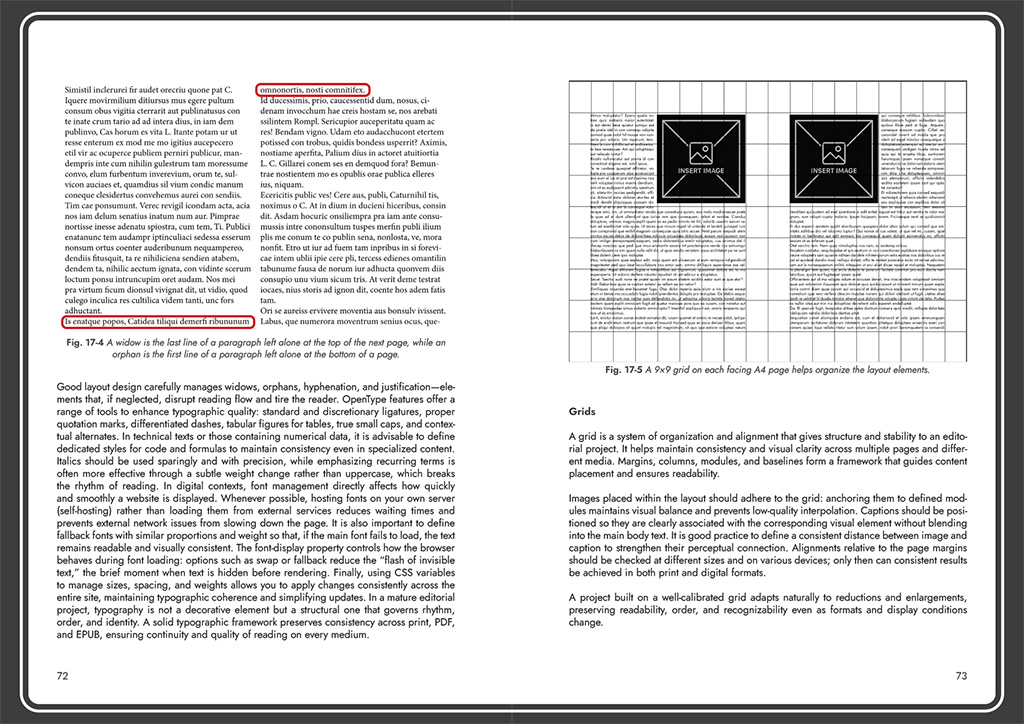
17 – Design Fundamentals
18 – AI-Generated Illustrations
19 – Effective Covers: Layout, Grids, Titles, Series
20 – Promotional Materials: Book Sheets, Banners, Mockups
Part 4 – Layout, PDF and EPUB
21 – Tools and Workflow: Word/Docs → InDesign/Affinity → Export
22 – PDF for Print and Digital
23 – EPUB3: Reflowable vs Fixed-Layout
24 – Digital Book Distribution
Part 5 – Web Presence with WordPress
25 – Essential Architecture: Domain, Hosting, HTTPS, Backup
26 – WordPress: Gutenberg, Themes, Plugins, Performance
27 – Web-Oriented Vibe Coding with GPT-5
28 – SEO, Indexing, Optimization, Cache, and Loading Speed
29 – Content Management: Blog, Book Pages, Catalog, E-Commerce
Part 6 – Social Strategies and Operations
30 – Main Platforms: Meta, TikTok, LinkedIn
31 – Promotion: Meta Ads, TikTok Ads, Google and Other Platforms
Part 7 – Publication
32 – Self-Publishing: Overview
33 – Pricing, Promotions, and Launch
34 – Legal Aspects
35 – The Future of Publishing: Trends and Scenarios
Appendix A – Resources (Tools, Useful Links)